


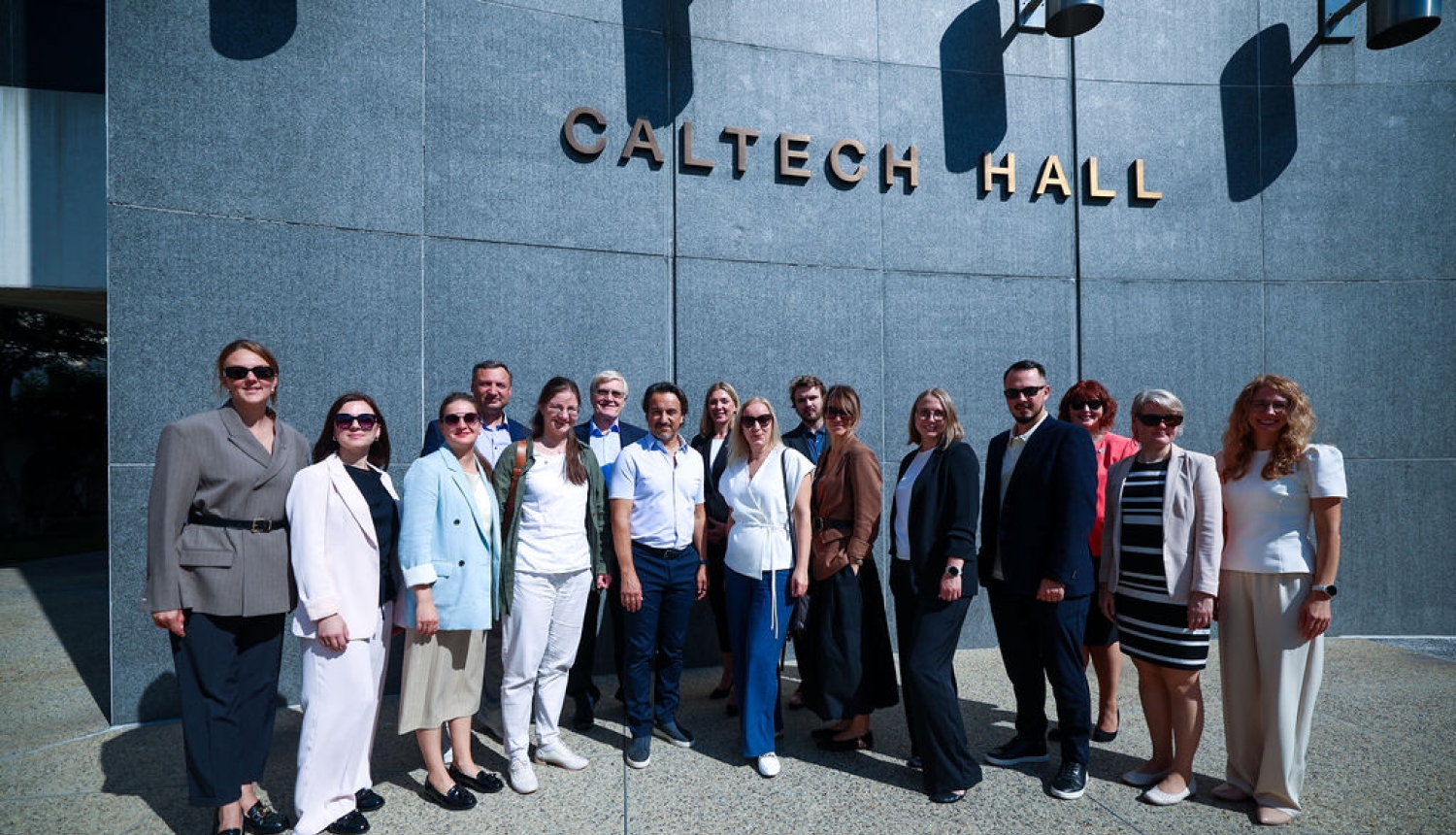
Biomedicine and genomics represent one of Latvia’s research success stories, and the Latvian delegation’s program in California covers two mutually complementary areas—the development of genomics technologies and the commercialization of scientific results. In the field of genomics, Latvia’s offering is supported by the internationally recognized expertise of its scientists, the Latvian National Biobank, the Genome Center’s sequencing infrastructure, and experience in international projects. The delegation includes scientists, a hospital management representative, specialists in innovation and international cooperation from universities and research institutions, as well as representatives of a health technology company.
During the trade mission organized by the Investment and Development Agency of Latvia (LIAA), they will meet in Los Angeles and San Diego with U.S. genomics companies, research organizations, and university technology transfer and commercialization centers to establish cooperation in research, testing new technologies, licensing, and joint product development. The trade mission is taking place during President Edgars Rinkēvičs’ working visit to the U.S., which runs through September 27.
“In 2025, the U.S. was Latvia’s eighth-largest export market, to which we exported goods and services worth 1.01 billion euros. We aim to increase the share of knowledge- and technology-based products and services created in Latvia within these exports. Every Latvian company arrives at the talks in California with its own goal—to find a clinical trial partner, a technology integrator, a manufacturer, an investor, or new customers in the U.S. “The economic value of these negotiations will be determined by new research projects, cooperation agreements, and export revenues,” emphasizes Raivis Bremšmits, State Secretary of the Ministry of Economics.
In Los Angeles – From Biological Samples to Technology Commercialization
The Los Angeles program began with a visit to ProteoGenex, a company that provides human biological samples and related clinical information to research and pharmaceutical companies. The company’s biobank contains tissue, blood, DNA, RNA, and other samples available for research. The Latvian delegation learned about the company’s work and discussed opportunities for collaboration in the use of biological samples and research.
The delegation also visited the Technology Development Group at the University of California, Los Angeles, which focuses on evaluating inventions, protecting intellectual property, licensing, business development, and collaboration with industry.
The California Institute of Technology’s Office of Technology Transfer and Corporate Partnerships helps transfer technologies developed by researchers to companies, creates new companies, and manages the patenting and licensing processes. The Latvian representatives discussed joint research projects, collaboration with companies, and intellectual property licensing opportunities with specialists from both universities.
“Latvia’s success story in biomedical and genomics research is shaped by scientists, the Latvian National Biobank, sequencing infrastructure, and experience in international projects. Latvia’s next challenge is to more frequently translate this knowledge into diagnostic methods, medical technologies, licenses, and new companies. That is why the delegation includes not only researchers but also a representative of hospital management, as well as university specialists in innovation and technology transfer. In California, they are meeting with companies and universities that have extensive experience in commercializing scientific results. “The practical outcome of this visit will be determined by specific next steps—joint research, technology testing, licensing negotiations, or a partner for product development,” notes LIAA Director Ieva Jāgere.
San Diego – Genomics and Precision Medicine
The rest of the program in San Diego includes meetings with the genomics technology companies “Element Biosciences” and “Illumina.”
“Element Biosciences” develops technologies for DNA and RNA sequencing, single-cell analysis, and spatial biology. Latvian researchers will discuss with company representatives opportunities to test new research methods and develop genomics solutions in Latvia.
Illumina’s technologies are used in human genome research, cancer and rare disease research, the development of diagnostic solutions, and drug development. The discussions will focus on the use of genomics for earlier disease detection, individual risk assessment, and the selection of more precise treatments.
“Genomics is one of the National Research and Innovation Institute’s (NIRI) core strengths and internationally competitive areas of expertise. The institute has at its disposal the Latvian National Biobank, the Genome Center’s sequencing infrastructure, and experience in international research projects. In our discussions with “Element Biosciences” and “Illumina,” we can offer our research expertise and infrastructure. Through this collaboration, we aim to test and develop new genomics technologies in Latvia that will help detect diseases earlier, assess individual risk more accurately, and select the most appropriate treatment for patients in the future,” explains Dr. Vita Rovīte, explaining NIRI’s objectives for the trade mission organized by LIAA.
The delegation will also visit the Technology Transfer Office at San Diego State University and the Office of Innovation and Commercialization at the University of California, San Diego. Discussions will focus on the evaluation, patenting, and licensing of university-generated inventions; the creation of new companies; attracting industry partners; and the development of joint research projects.
From Research to the Clinical Setting and the Market
The Latvian delegation includes representatives from the National Research and Innovation Institute (NIRI), “Double Helix Technologies,” Riga Stradiņš University, Riga East University Hospital, Daugavpils University, and the University of Latvia.
The delegation’s areas of expertise include molecular and functional genomics, molecular oncology, clinical and genetic research on tumors, health data technologies, laboratory information systems, technology transfer, and the establishment of international partnerships. Representatives from “Double Helix Technologies” offer expertise in integrating laboratory equipment with information systems and automating the flow of research data.
Following the visit, delegation members will continue to work with partners with whom specific opportunities for cooperation have been identified in the areas of research, testing of new genomics technologies, intellectual property licensing, the development of health data solutions, and the commercialization of research results. The LIAA will provide support in coordinating contacts, addressing U.S. market issues, and utilizing appropriate export, innovation, and investment support instruments.
The life sciences program is part of the Latvian business trade mission to the U.S. organized by LIAA, which will visit New York, Los Angeles, and San Diego through September 27. Separate sector-specific itineraries have also been prepared for representatives of startups, the film industry, as well as the defense and dual-use technology sectors.
The LIAA organizes participation in this international trade mission as part of the European Union-co-financed Program for the Development of Innovative Entrepreneurship in Small and Medium-Sized Enterprises (SMEs), with support from the European Regional Development Fund and state funding. A company may participate in the trade mission either by paying a fee or by receiving support to cover eligible expenses.