In the eyes of investors, the Baltic and Nordic countries are increasingly forming a single economic area whose competitiveness is driven by human capital, innovation, digitalisation and the ability to adapt to change. This was one of the key conclusions of the panel discussion “A Nordic View: Foreign Investors in the Baltic States”, held during the 35th Annual Meeting and Business Forum of the European Bank for Reconstruction and Development (EBRD). Investors acknowledged that the Baltic economies have reached a new stage of development and are increasingly shifting towards a high value-added growth model. At the same time, participants emphasised that Nordic companies continue to expand and deepen their investments across the Baltic states.
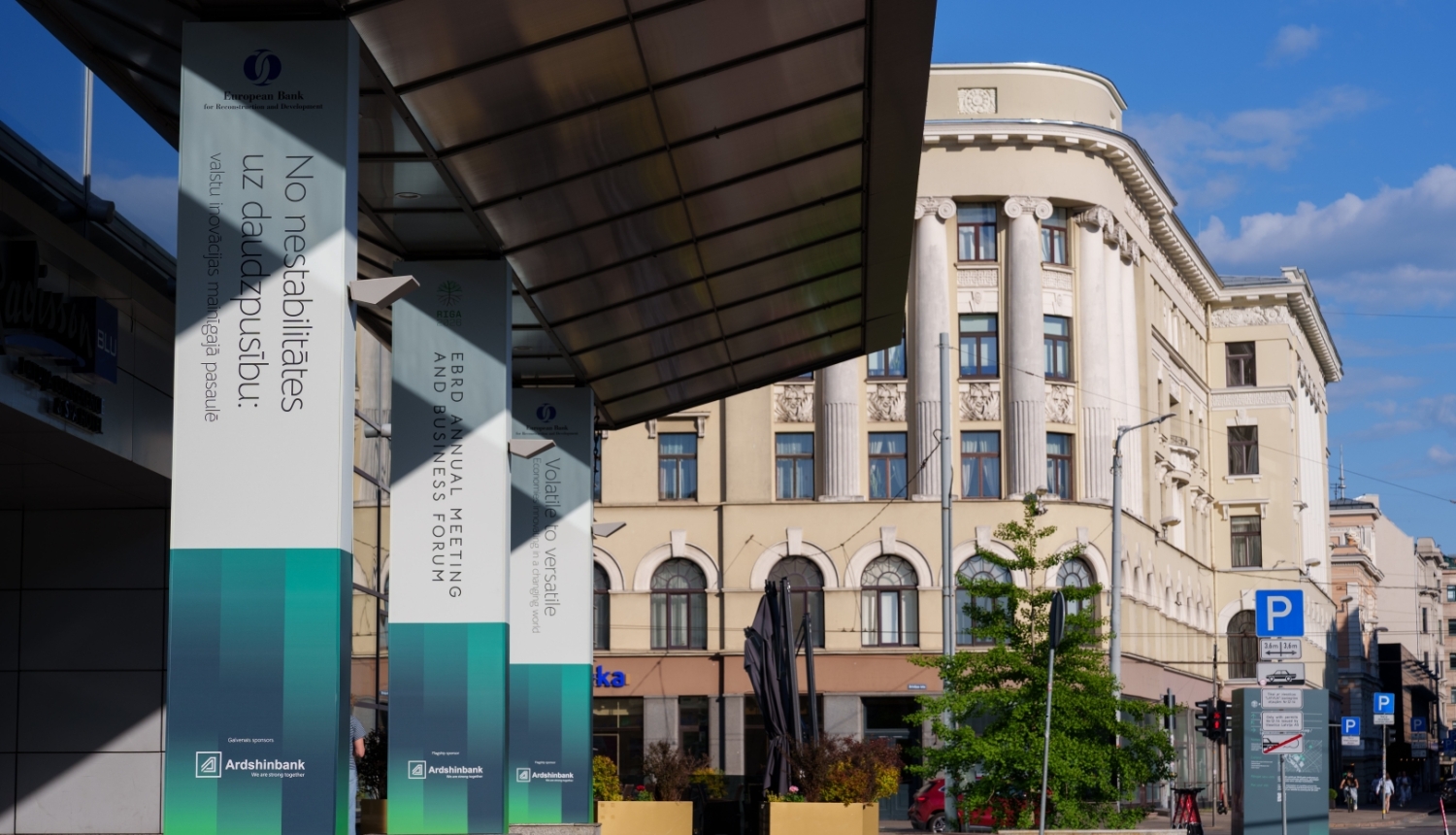
The discussion took place as part of the EBRD’s 35th Annual Meeting and Business Forum in Riga, held from 5 to 7 June, bringing together government representatives, leaders of international financial institutions, investors and business executives from dozens of countries. The panel focused on foreign investors’ perspectives on the competitiveness, investment environment and future development prospects of the Baltic region.
The discussion featured Tatjana Guznajeva, Executive Director of the Foreign Investors’ Council in Latvia (FICIL); Frode Grønvold, Chief Executive Officer of Linstow Baltic; Svetlana Kocerova, Head of the International Office in Riga at DNB; H.E. Ine Måreng, Ambassador of Norway to Latvia; Jānis Ošlejs, Founder and Chief Executive Officer of Primekss Group; and Mikko Autti, Alternate Board Director at the EBRD representing Norway, Finland, Latvia and Lebanon.
The Baltics and the Nordics Are Becoming a Single Economic Area
One of the central themes of the discussion was the deepening economic integration between the Baltic and Nordic countries. Investors noted the growing importance of regional cooperation, infrastructure connectivity, access to capital and the development of shared financial instruments. Participants repeatedly highlighted that the Baltic and Nordic countries are increasingly viewed as a single economic region, shaped by common interests, interconnected markets and shared values.
Projects such as Rail Baltica, energy interconnections and closer capital market integration were identified as key prerequisites for future growth, strengthening the region’s competitiveness and attracting new investment.
Latvia’s Minister of Economics, Viktors Valainis, emphasised that investors’ perspectives reflect significant changes in the economic positioning of the Baltic states:
“The views of foreign investors are particularly valuable because they allow us to see how profoundly the role of the Baltic states in the European economy has changed in recent years. Historically, the Baltic and Nordic countries have been connected through strong economic and trade ties, and investors increasingly recognise that these links are being renewed in a new form. More and more, the Baltics and the Nordics are perceived as a single region with shared interests, close business relationships and a common development trajectory. This is an important signal for Latvia, as it confirms that our future growth is closely linked to our ability to fully leverage this regional integration in business, investment and innovation.”
Baltic Competitiveness Is No Longer Based on Low Costs
Participants agreed that the Baltic states have entered a new stage of development. Several investors stressed that the region’s competitive advantages are increasingly less dependent on lower labour costs and increasingly driven by productivity, research and development, innovation commercialisation and the ability to build internationally competitive, high value-added companies.
Particular emphasis was placed on the fact that the Baltic states possess all the necessary advantages to develop new products, technologies and companies capable of competing globally. However, future success will depend on the region’s ability to create more scale-up companies and to convert knowledge and innovation into commercial success more effectively.
Human Capital and Digitalisation Are Becoming Key Investment Magnets
The discussion highlighted human capital as one of the Baltic region’s greatest strengths. Investors spoke positively about workforce qualifications, language skills, adaptability and the ability to embrace new technologies. Several speakers particularly emphasised the capacity of younger professionals to operate in international environments and quickly adapt to technological change.
The region’s advanced level of digitalisation was also highlighted as a significant advantage for both business development and investment attraction. According to investors, the Baltic states continue to strengthen their reputation as a digitally advanced region with substantial innovation potential.
Investors Continue to See Growth Opportunities in the Baltics
A recurring theme throughout the discussion was investors’ long-term confidence in the Baltic economies and their growth prospects. Several panellists noted that in recent years they have not only maintained their presence in the region but have also expanded operations, developed new services and launched additional investment projects.
Investors identified a skilled workforce, high levels of digitalisation, a strong business environment and the ability to adapt to changing circumstances as key strengths of the Baltic states. Participants agreed that these factors continue to reinforce confidence in the region’s long-term competitiveness and growth potential.
LIAA Director General Ieva Jāgere noted that the discussion delivered a clear message about how international investors currently perceive the Baltic region:
“This discussion demonstrated that the Baltic states have fully outgrown their status as low-cost economies in the eyes of investors. Whereas ten or fifteen years ago the region was often viewed primarily as an efficient location for manufacturing or service delivery, today investors speak about talent, technology, innovation and the ability to build globally competitive companies. It is particularly significant that this assessment comes at a time of ongoing geopolitical uncertainty in Europe. Investors’ willingness not to reduce but to increase their presence in the Baltics is a powerful vote of confidence in the region’s resilience and long-term potential.”
The discussion concluded with a shared assessment that the Baltic states have successfully transitioned from a cost-competitiveness model towards a development model based on knowledge, technology and innovation, while becoming an increasingly integrated part of the wider Northern European economic area.