


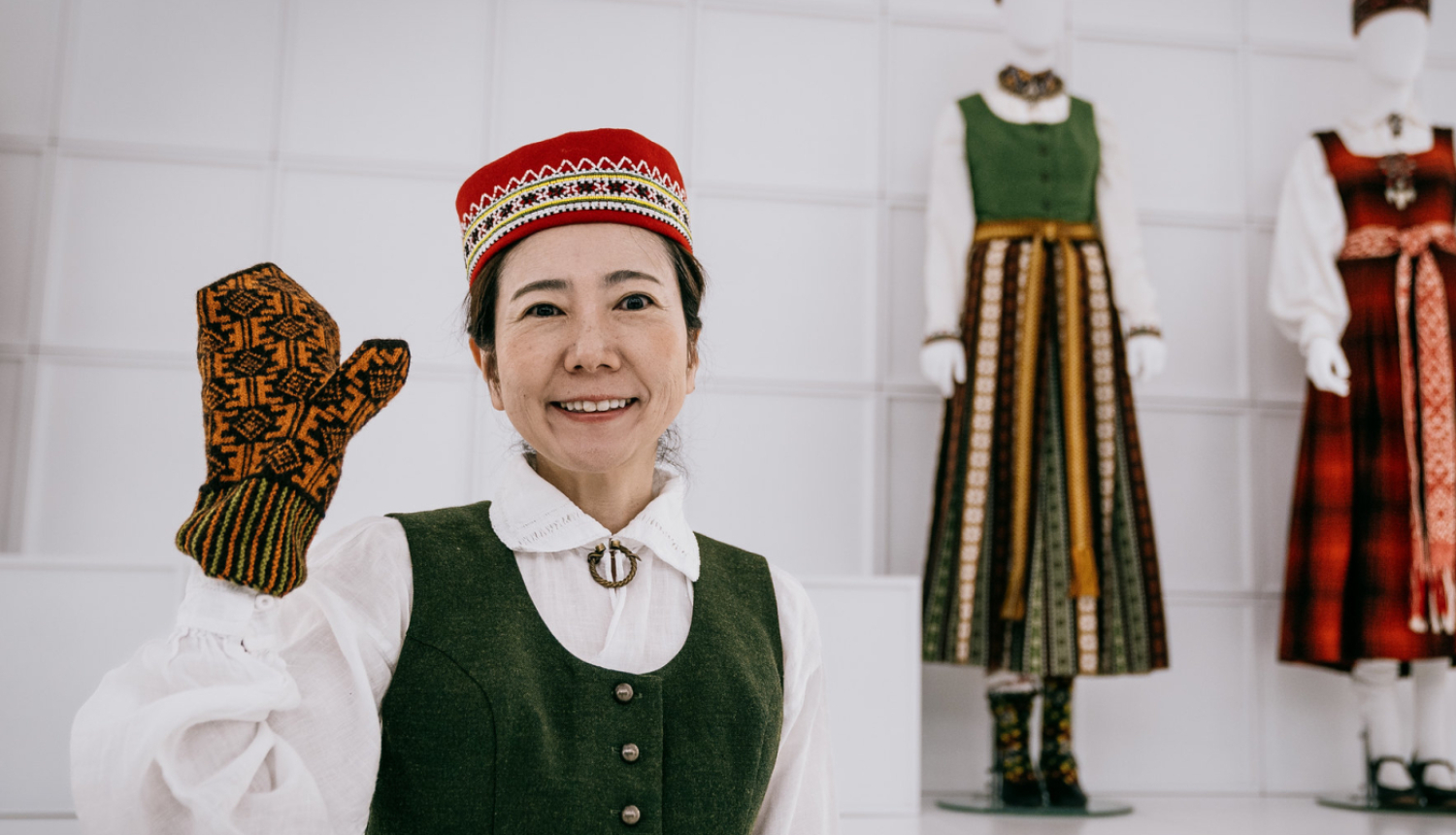
On October 13 this year, the Baltic Pavilion, jointly created by Latvia and Lithuania, closed its doors to visitors at the international exhibition "EXPO 2025 Osaka". During the pavilion's operation, it was visited by a record number of guests – 900,000 people, while more than 200 Latvian companies, including representatives from the tourism sector, participated in or were represented in business activities.
Participation in EXPO has generated great interest in Latvia and laid a long-term foundation for cooperation with the Japanese tourism industry, according to industry experts. The Japanese market is characterized by a culture of trust-based, long-term relationship building, so the cooperation that began this year has already yielded its first results and will continue to do so in the long term.
Attracted by nature and traditions
During EXPO, Latvian representatives presented the authenticity of our culture – the Song and Dance Festival tradition, Midsummer and summer solstice celebrations, sauna traditions, basket weaving skills, linen products, traditional folk costumes, outdoor activities, giving a greater role to experiential tourism – master classes, crafts, tastings, and authentic culture.
Industry representatives point out that Japanese tourists are particularly attracted to Latvian handicraft traditions – weaving, embroidery, the use of natural materials in rituals, as well as a close connection with nature. They are also interested in what cities have to offer, where Art Nouveau architecture blends with a natural, peaceful experience, diverse cultural activities, and easy accessibility for both everyday and business logistics. The Japanese particularly appreciate the quality of local cuisine, highlighting its delicious and sustainable culinary offerings. According to industry representatives, there is also interest in Christmas markets and winter season offers, which have not been so popular in this market until now.
Tourist interest is growing
Rundāle Palace, which participated in the trade mission to Japan organized by the LIAA in May this year, does not work directly with the Japanese market, but through tourism companies that make group reservations. Its representatives have already observed an increase in organized group tourism this year compared to 2024. Rundāle is often included in Baltic travel programs together with Cēsis and Sigulda, which are particularly attractive to Japanese tourists due to their authentic environment and craft traditions.
The tour operator Estravel Latvia, which participated in the aforementioned trade mission to Japan, also acknowledges that this year the demand from Japanese tourists has increased by about 40% compared to last year.
"Japanese tourists have gradually started traveling again, and we are already receiving requests for 2026. The presence of the president and minister during EXPO gave greater significance to the company's participation – we were taken more seriously, and this opened the door to further cooperation," explains Anta Jokste, head of Estravel Latvia.
The increase in tourists is also confirmed by data from the Central Statistical Bureau – in the first eight months of this year, there were 47% more tourists from Japan than in the same period last year.
Latvia is becoming a destination in its own right
Latvia is gradually strengthening its position on the list of destinations for Japanese tourists. For example, one of the leading Japanese tour operators working with the Baltic countries is offering its customers an exclusive Baltic travel program in honor of the company's anniversary. Unlike in previous years, when Japanese travelers were offered short 1-2 day travel programs in each country, this time a week-long program is planned in Latvia. This means that Japanese tourists will stay longer in our country, generating greater economic benefits for the local tourism industry.
Latvia's name in Japan is also associated with authentic cultural experiences, including Latvian sauna traditions. Participation in EXPO has given a wider audience the opportunity to learn about the world of saunas presented by sauna specialist Ieva Kolosova, which has sparked unexpectedly great interest among the Japanese. A striking example is Rīna, a Japanese woman who first gained insight and inspiration from Ieva Kolosova's book on Latvian sauna traditions. Meeting the sauna master in person at EXPO became a turning point – after hearing the opinion that she herself had the knowledge and talent to become a Japanese sauna master, Rīna decided to go to Latvia. She spent more than a month here, intensively learning the art of the Latvian sauna in its authentic environment, so that she could later take her newly acquired knowledge back to Japan.
Results after several years
Tourism experts acknowledge that the effect of EXPO will not be measurable immediately. "Cooperation with Japan in the tourism sector requires long-term trust. What we showed Japanese tour operators several years ago is only now appearing in their travel brochures. We will only see the results in a few years, when the new offers appear in Japanese catalogs and tourist flows become more stable," emphasizes Linda Ziediņa-Ērgle.
However, the first signs are already visible: during EXPO, internet searches for Latvia as a destination increased by 29%, with the most active searches coming from Tokyo and Osaka. Therefore, it is very important to maintain and develop the contacts that have been established.
Our country's recognition has been promoted not only by Latvia's participation and the events organized within the framework of EXPO, but also by the visit of Japanese journalists to Latvia at the end of October this year, organized by the LIAA. During the visit, representatives of major tourism, business, and lifestyle media outlets got to know Latvian culture, traditions, technology environment, and businesses. The journalists highlighted Latvia as a wellness destination, particularly praising the sauna procedures, the range of relaxing activities in nature, and the incredibly delicious and high-quality cuisine. In December of this year, Japanese tourism media and tour operator representatives will visit Latvia to learn about Christmas markets and winter tourism offerings in Riga and beyond.
Industry representatives predict that we will see a real influx of tourists from Japan in about two to three years, when the cooperation initiated during EXPO will translate into specific travel itineraries. Until then, Latvia must continue to maintain relations, promote itself, and offer authentic experiences—which are what Japanese travelers value most.
Translated with DeepL.com (free version)