With the support of the Investment and Development Agency of Latvia (LIAA), SCHWENK Latvia’s “Brocēni CC” project has become the first European Union-approved strategic climate-neutral industrial project in the Baltics. As part of the project, more than 500 million euros are planned to be invested in Brocēni, introducing carbon capture technologies and significantly reducing CO₂ emissions in Latvia.
The European Commission has approved the project as a strategic project under the Net-Zero Emissions Industry Act (EU Regulation 2024/1735)—a regulation in the category of decarbonization of energy-intensive industries within the cement sector. The project is scheduled to be completed by 2032.
“The investment of more than half a billion euros in Brocēni confirms that Latvia is capable of competing for European-scale industrial projects and becoming one of the leaders in green industrial development in the Baltics. The SCHWENK Latvia project is one of the most significant industrial transformation projects in the region—it will strengthen the competitiveness of Latvian exports, develop modern carbon capture technologies, and significantly reduce emissions. It is particularly important that such a project is being implemented in Brocēni, home to Latvia’s only cement plant and one of the most significant construction materials production centers in the Baltics. It also sends a clear signal to international investors that Latvia possesses both the necessary infrastructure and expertise, as well as professional institutions capable of developing such large-scale projects. “The support provided by the LIAA and coordination with the European Commission were crucial for Latvia to establish itself on the map of strategic European investments,” emphasizes Minister of Economics Viktors Valainis.
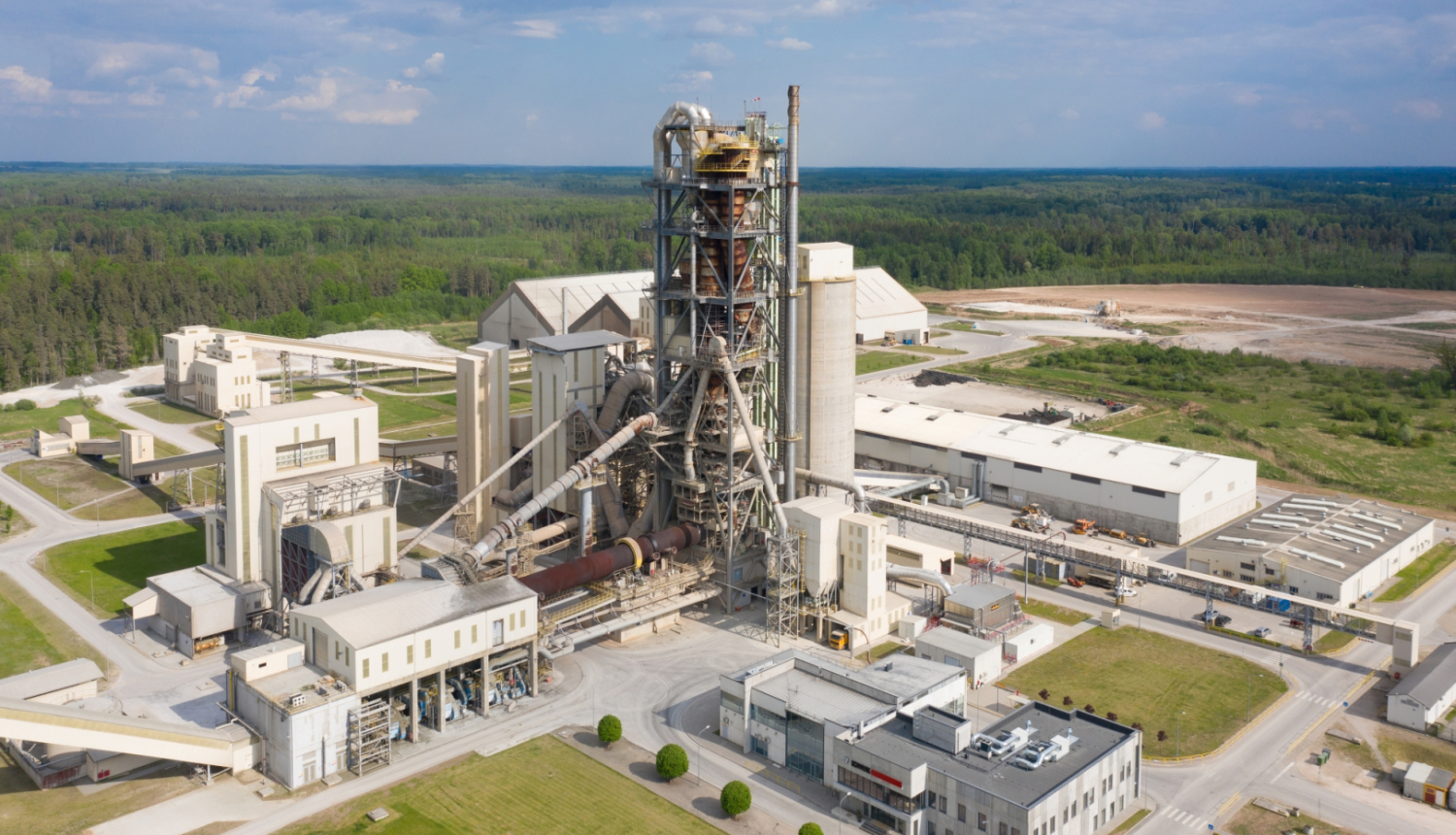
As part of the project, SCHWENK Latvia plans to install carbon capture equipment at the cement plant in Brocēni, Saldus Municipality. The goal is to establish the first CO₂-neutral cement plant in the Baltics by 2032.
The project is expected to reduce CO₂ emissions by approximately 800,000 tons annually, while the total contribution to reducing Latvia’s greenhouse gas (GHG) emissions between 2031 and 2040 will reach more than 8 million tons of CO₂ equivalent, or approximately 7% of Latvia’s total GHG balance.
The LIAA, which serves as the contact point in Latvia under the Net-Zero Emissions Industry Act, provided support for the project’s advancement in cooperation with the European Commission.
“This project demonstrates that Latvia is capable of attracting very substantial investments for the development of high-value-added and sustainable industry. The SCHWENK Latvia project is a significant step both for Latvia’s economic competitiveness and for the transition to climate-neutral manufacturing, while simultaneously strengthening Latvia’s role in the development of Europe’s green industry,” emphasizes LIAA Director Ieva Jāgere.
The project involves a wide range of Baltic and regional partners, including energy, transport, and infrastructure companies—KN Energies AB, Akmenes Cement AB, Mitsui O.S.K. Lines Ltd., and Larvik Shipping AS.
Carbon capture technologies are expected to become one of the key solutions in the cement industry’s transition to net-zero emissions in the future. The technologies used in the project ensure high energy efficiency and lower technological risks, while also creating a new level of circular economy, transforming carbon from a waste product harmful to the atmosphere into a resource for the production of other products.
The European Commission officially designated the project as a strategic project on February 12, 2026.
Translated with DeepL.com (free version)